


Why does Nobita keep playing with Chaien even though he’s often bullied by him? From an adult perspective, it seems illogical. Being hit, threatened, and forced into things should push someone away, maybe even end the friendship. Yet throughout hundreds of Doraemon episodes, Nobita never turns his back on Chaien.
In fact, when Chaien is in trouble, Nobita worries, runs to ask Doraemon for help, and still sees Chaien as a “friend.” The real reason behind this is far more complex than a simple right-or-wrong scenario, making even longtime Doraemon fans reconsider this seemingly toxic relationship.
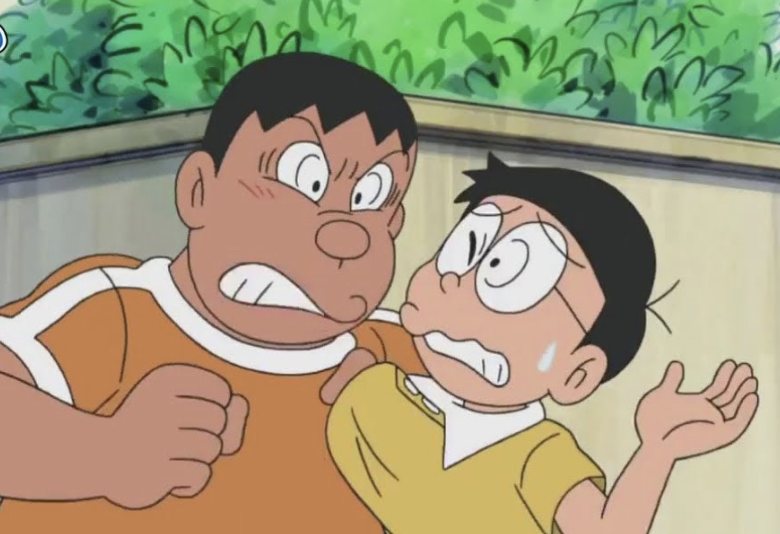
First, we must accept a fact: Chaien does bully Nobita. This is undeniable. He uses his strength, loud voice, and intimidation to control others, especially Nobita. But Doraemon never portrays Chaien as a pure villain. Chaien is a “naturally aggressive” character, hot-tempered, competitive, and eager to show power, but not cunning or scheming. His bullying is childish, direct, and emotional. This means their relationship doesn’t fit the typical “bully and victim” mold seen in real life.
The first reason Nobita stays friends with Chaien lies in Nobita’s personality. Nobita fears loneliness more than pain. For him, being scolded or hit is easier to bear than feeling abandoned. He’s not good at making friends, not strong or outstanding, so he clings to every relationship, even if it’s flawed. Chaien, Suneo, and Shizuka form Nobita’s entire social world. Leaving Chaien means facing not just danger but complete isolation.
But if it were just weakness holding him back, Doraemon wouldn’t have sustained this relationship for so long. More importantly, Nobita sees something in Chaien that others often miss: loyalty. When outsiders threaten their group, Chaien almost always defends his team, including Nobita. He may bully Nobita, but he won’t let others do it. To Chaien, Nobita isn’t just a weak target but “one of his own.” It’s a twisted form of protection, but it’s enough for Nobita to feel connected.
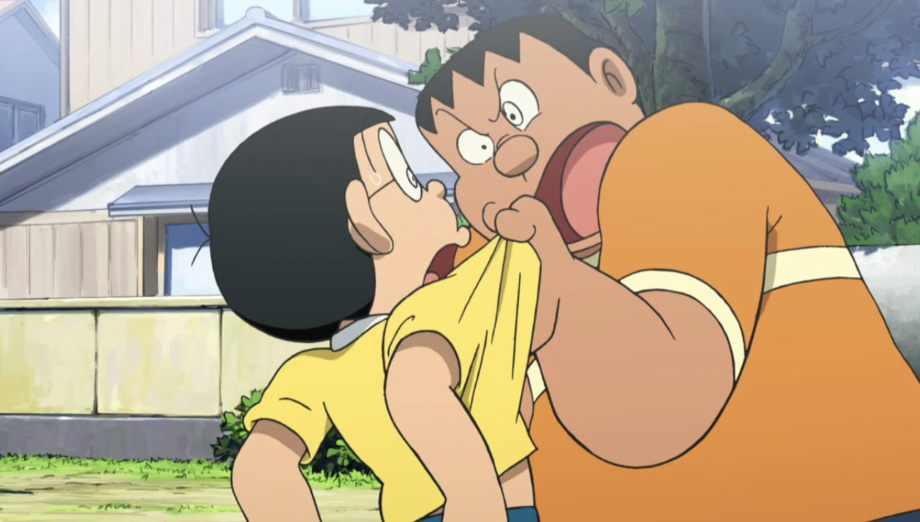
Another reason, challenging common fan assumptions, is that Nobita isn’t entirely a passive victim. He understands Chaien well, knowing he’s hot-headed but soft-hearted, aggressive but caring. Chaien can hit others but also cries openly for his mother, sister, or friends in trouble. Nobita has witnessed these moments so often that he can’t see Chaien as just a bully. To Nobita, Chaien is a predictable kind of “bad,” more trustworthy than cold, distant relationships.
On a deeper level, their relationship reflects the genuine psychology of children. At that age, the line between friend and tormentor isn’t as clear as adults think. Kids can fear, like, hate, and need someone all at once. Chaien gives Nobita a sense of belonging, a chance to join games and adventures, even if it means tears. For Nobita, it’s still life within a group, not being left behind.
Perhaps this contradiction is what has made Doraemon endure in the memories of many generations. It also means the question “Why does Nobita still play with Chaien?” has no single answer. It depends on whether viewers see the story through the eyes of a child or through the experiences gained over time.