


Recently, Nobuyoshi Habara, director known for Rurouni Kenshin, expressed surprise upon learning that “isekai” has officially been added to the Oxford English Dictionary. This is not only exciting news but also clear proof of the powerful global influence of otaku culture.
“Isekai” Goes Global, Officially Included in Oxford English Dictionary
The story began when director Nobuyoshi Habara, behind hits like Rurouni Kenshin and Gundam SEED Freedom, attended Animethon 2025 in Canada. There, he was surprised to discover that “isekai” had been officially added to the Oxford English Dictionary.
On social media, he wrote: “What surprised me is that the Japanese word ‘異世界’ (isekai) is not only understood by foreigners but also listed in the 2024 edition of the Oxford English Dictionary.”
According to the dictionary, “isekai” is more than just “another world” as its literal Japanese meaning. It has become the name of a Japanese fictional genre where the main character is transported or reincarnated into a strange, different world. Being included in the Oxford Dictionary marks an important milestone and a clear sign of the strong global impact of Japanese anime and manga.
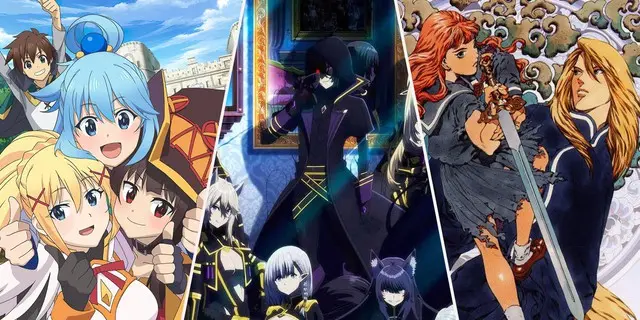
“Isekai” Is More Than a Noun, It’s Also a Verb
The popularity of “isekai” in English goes beyond being just a noun. Director Habara was also told by Japanese fans about an interesting fact: “isekai” can also be used as a verb.
A typical example is the sentence: “Truck-kun isekai’d Tetsuya into a world ruled by dinosaurs.” Here, “isekai” becomes a verb describing the act of transporting someone to another world. This flexible usage shows how deeply “isekai” has embedded itself into popular culture and everyday language.

Otaku Culture Integrates Into Mainstream Society
The fact that “isekai” has moved beyond the otaku community to become a global keyword shows how much anime and manga culture has expanded compared to previous years. It is no longer just a niche hobby but part of worldwide popular culture.
This demonstrates how Japanese culture is increasingly integrating into global culture, with specialized otaku terms gaining recognition and widespread use. This is a major step forward, opening more opportunities for the anime and manga industry in the future.