


For many Doraemon fans, especially longtime viewers, the question “Why does Shizuka choose to marry Nobita?” has always sparked debate. To most, Nobita is the classic clumsy kid: poor at school, bad at sports, often crying, and frequently bullied by Jaian and Suneo. He’s even labeled as weak, lacking courage, and falling behind his peers both in ability and IQ. Yet, the girl considered the “nation’s sweetheart” ends up committing her life to him. This mystery puzzles children and even adults revisiting Doraemon.
On the surface, Nobita is clearly not the ideal choice. He’s not good at earning money, lacks academic achievements, and doesn’t have the looks or confidence to impress others. Compared to Dekisugi, the smart, polite, and mature classmate, Nobita falls short in almost every way. For years, many fans believed Shizuka deserved someone better. But Doraemon has never been a fairy tale about who is more talented or successful getting happiness.

The first reason Shizuka chooses Nobita lies in his heart, not his abilities. Nobita is incredibly kind. He’s willing to cry over others’ pain and protect Shizuka even when he knows he might lose. In some episodes, Nobita takes the blame, gets scolded, or even hurt just so Shizuka doesn’t suffer. In a world where selfishness and rivalry are common among kids, such kindness is far from ordinary.
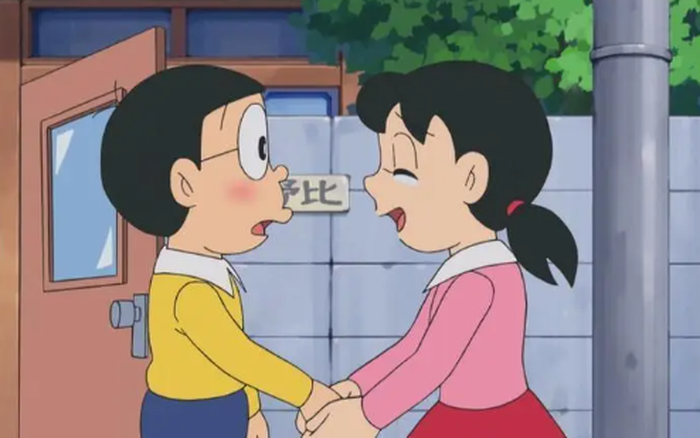
Secondly, Nobita loves Shizuka unconditionally. He doesn’t love her for her beauty or intelligence but simply because she is Shizuka. Nobita never tries to change her or expects her to be someone else to fit him. Instead, he believes he must improve himself to be worthy of her. His love may be awkward and clumsy, but it’s rare in its sincerity.
Many fans overlook that Nobita can change when it matters. When facing truly important moments, Nobita is no longer the boy who only runs away. In future episodes, without Doraemon by his side, Nobita must face life on his own. That’s when he learns to grow up. The future Nobita isn’t perfect but strong enough to support Shizuka. He doesn’t become a genius but becomes a responsible husband.
As for Shizuka, she’s not the type to judge by achievements or looks. She’s emotional and values emotional security over material things. Nobita gives Shizuka a unique sense of understanding and protection. With Nobita, Shizuka doesn’t have to push herself to be better, compete, or fear comparisons. She can simply be herself.
A deeper, more realistic reason is that Nobita needs Shizuka, and she knows it. Nobita is weak, yes. But that weakness makes him cherish those around him. He never takes Shizuka’s presence for granted. To him, Shizuka is his whole world. In a long-term relationship, being valued can matter more than marrying someone talented but indifferent.
Ultimately, Doraemon delivers a clear message through Shizuka’s choice: marriage isn’t about picking the best person but the right person. Nobita may seem inadequate by society’s standards, but he’s the one who brings Shizuka peace. He might not be smart by test scores, but he has emotional intelligence many lack.
So if you only see Nobita’s bad grades, tears, or bullying, you might never understand Shizuka’s decision. But looking deeper reveals a choice far from naive. It’s the choice of someone who truly knows what they need for a lifetime together. Perhaps that’s why, despite being seen as weak or flawed, Nobita is the man Shizuka trusts to hold her hand to the end.
Don’t judge others by appearances
In life, people tend to judge each other within seconds of meeting. A simple outfit, shy demeanor, or awkward words can lead to labels like weak, insecure, or unreliable. But appearances are just a fragile, misleading shell. Judging people by looks is not only shallow but causes us to miss the true value hidden inside each person.
Some speak fluently and look sharp, attracting attention wherever they go. Yet behind that confidence might be a big ego, impatience, or irresponsibility. Conversely, many quiet, simple, or shy people possess strong inner strength, kindness, and remarkable resilience. Outward looks reflect circumstances, habits, or surface personality but don’t reveal the depth of character or true worth.
Judging others by appearances can also lead to prejudice. Once labeled as “less capable,” “not good enough,” or “unsuitable,” we often treat them according to those biases. This is not only unfair but can silently hurt others. Many people have great potential and dreams but lose confidence because of harsh judgments and scrutiny.
More importantly, appearances don’t reflect the journey someone has been through. A simply dressed person might be dedicating all their energy to family. A quiet person might have faced hardships that make them cautious. We don’t know what others have overcome to stand strong today, so judging by surface is unfair.
Avoiding judgment based on looks also teaches humility. Realizing we can’t fully understand someone in minutes helps us listen more, empathize deeper, and think less hastily. Society becomes kinder when people treat each other with respect instead of prejudice.
Finally, not judging by appearances is not just a moral lesson but a way to live more meaningfully. When we see others with understanding, we give them the chance to be themselves and ourselves the chance to learn values that appearances never reveal.