


The world of Pokémon captivates fans with creatures that have strange powers, from breathing fire and controlling lightning to bending space. However, not every move in the series is purely fantastical. In fact, Game Freak cleverly designs many Pokémon and their abilities based on real biological, chemical, or evolutionary phenomena found in nature.
Here are 5 Pokémon with special abilities inspired by science, showing that the Pokémon world is much closer to real life than many might think.
1. Corsola and Coral-Like Regeneration
Corsola is a Water/Rock-type Pokémon inspired by coral reefs. Notably, the Johto region’s Corsola represents living coral clusters, while Galar’s Corsola reflects bleached coral reefs affected by climate change and ocean acidification.
Interestingly, Corsola has the Regenerator ability, which restores one-third of its maximum HP whenever it switches out of battle.
This ability closely mirrors the biological process of real coral. Despite damage or tissue loss, many coral species can regenerate new tissue and repair their skeletons to survive. Though slow, this process is highly effective, helping coral reefs endure environmental challenges.
2. Qwilfish and One of the Ocean’s Deadliest Poisons
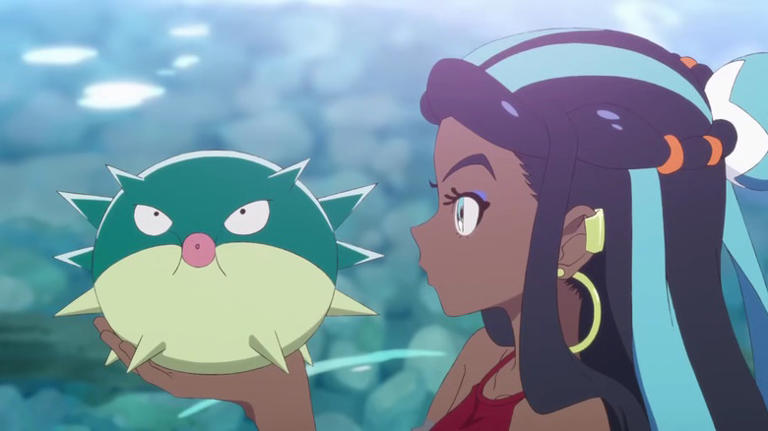
Qwilfish is a Water/Poison-type Pokémon introduced in Generation II. Its appearance clearly resembles a pufferfish.
In reality, pufferfish contain tetrodotoxin, a powerful neurotoxin estimated to be about 1,200 times more toxic than cyanide. This poison can paralyze the nervous system, cause respiratory failure, and lead to death if untreated.
In Pokémon, Qwilfish uses many Poison-type moves such as Poison Sting, Poison Jab, Toxic, Toxic Spikes, and Gunk Shot.
Toxic especially reflects its biological inspiration. Since Generation VI, Poison-type Pokémon’s Toxic move never misses, echoing how tetrodotoxin is extremely difficult to counter once it enters the body.
Although pufferfish mainly use their toxin defensively rather than offensively, Game Freak preserves the deadly nature of this creature in Qwilfish’s design.
3. Sandshrew’s Defense Inspired by Pangolins
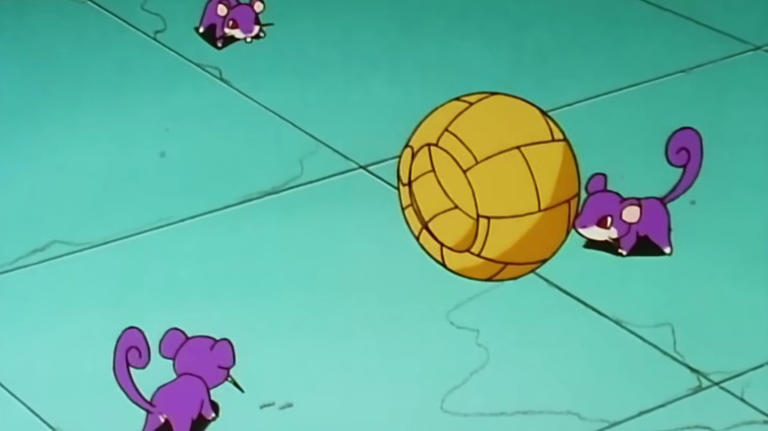
Sandshrew is a Ground-type Pokémon from the first generation, notable for its tough scales covering its body. This design is directly inspired by pangolins, mammals known for their hard scales and remarkable self-defense abilities.
In Pokémon, Sandshrew can use Defense Curl to boost its defense stats. Following up with moves like Rollout or Ice Ball increases the power of its attacks.
This perfectly simulates the pangolin’s behavior. When threatened, pangolins curl into a tight ball to protect their soft underbelly, their most vulnerable spot. Their hard scales act as natural armor, making it nearly impossible for many predators to cause harm.
4. Petilil and Sunflora Heal Through Photosynthesis
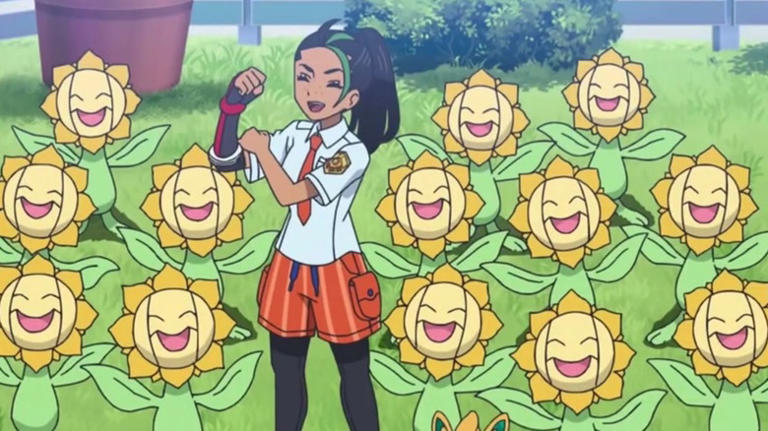
Petilil and Sunflora are Grass-type Pokémon modeled after real plants. Petilil resembles a young sprout, while Sunflora is inspired by sunflowers.
Both learn the move Synthesis, a healing ability whose effectiveness depends entirely on the weather.
On sunny days, Synthesis restores up to two-thirds of the user’s maximum HP. Under normal weather, it heals half, and during rain, sandstorms, or hail, the healing drops to just one-quarter.
This mechanism closely mirrors the photosynthesis process in plants. The stronger the sunlight, the more energy plants produce to grow and recover. Conversely, lack of sunlight or harsh weather conditions significantly reduce photosynthesis efficiency.
5. Vileplume’s Scent Inspired by the Corpse Flower
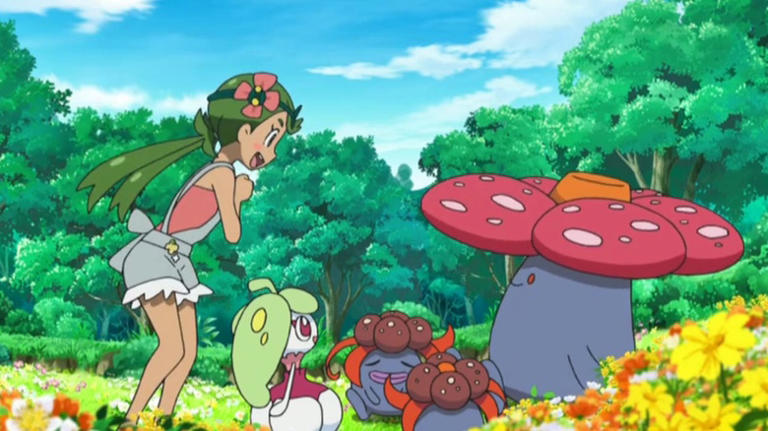
Vileplume is a Grass/Poison-type Pokémon inspired by the Rafflesia, the world’s largest flower, often called the “corpse flower.”
Rafflesia is famous for its extremely strong odor, which attracts flies and other insects for pollination. This survival strategy is crucial since this parasitic flower relies entirely on its host to grow.
In Pokémon, Vileplume has several scent-related moves. Sweet Scent lowers the opponent’s evasion and attracts wild Pokémon, reflecting how Rafflesia’s smell lures insects.
Aromatherapy can heal all status conditions of allies, similar to how the flower’s scent supports its survival and reproduction. While adapted for battle mechanics, both moves are rooted in real biological traits.