


Pokémon has celebrated over three decades of existence and growth. When Satoshi Tajiri created the game in 1996, he drew from his childhood passion for collecting insects. What started as a simple idea about discovering and evolving creatures has become a global phenomenon. Its influence extends beyond entertainment into biology education, neuroscience, and scientific approaches to evolution.
According to science journalist Miryan Naddaf from Nature magazine, the franchise is deeply rooted in scientific themes. Surprisingly, many beloved Pokémon characters possess powers that seem purely imaginative but are actually based on real biological and physical mechanisms. Here are seven standout Pokémon abilities that exist in nature.
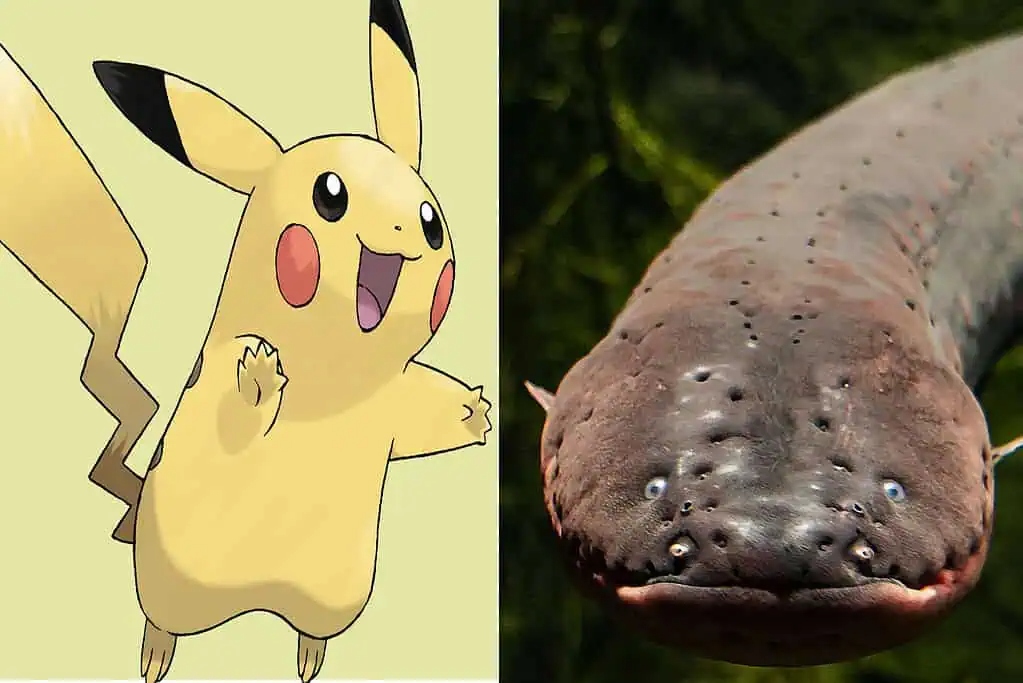
Electric Shock, Like Pikachu
In Pokémon, Pikachu stores electricity in its cheeks and releases powerful shocks during battles. This closely resembles the electric eel (Electrophorus electricus), which can generate over 800 volts using specialized cells called electrocytes. These cells act like stacked batteries, firing simultaneously to produce a strong electric current used for hunting and defense.
“Electric eels are like living batteries. They have stacks of modified muscle cells called electrocytes with positive and negative sides. When activated, these cells discharge an electric pulse into the surrounding water,” explains Rupert Collins, senior fish curator at the Natural History Museum in the UK.
This ability, known as bioelectricity, is inspiring research into biological batteries and medical devices. However, when it comes to cuteness, electric eels can’t quite match Pikachu.
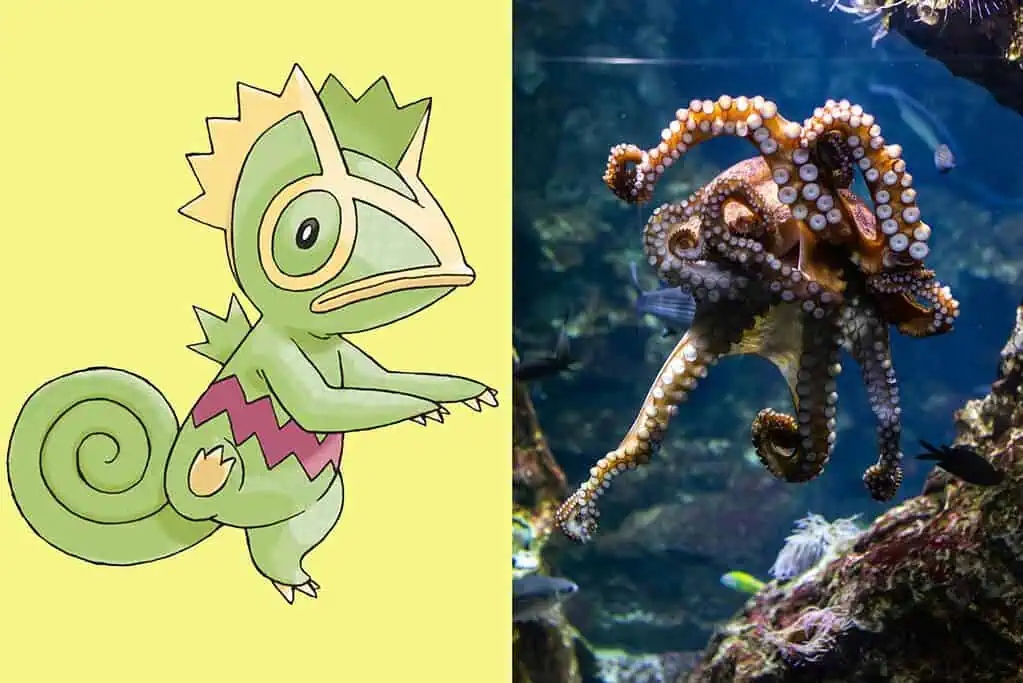
Invisibility, Like Kecleon
Kecleon can become invisible by perfectly blending into its environment. While true invisibility is impossible, some animals come remarkably close.
Creatures like cuttlefish and octopuses can instantly change their color, patterns, and even skin texture. They use specialized pigment cells called chromatophores, along with reflective structures, to match their surroundings.
By studying these structures, scientists are developing adaptive camouflage materials for military and robotic applications.
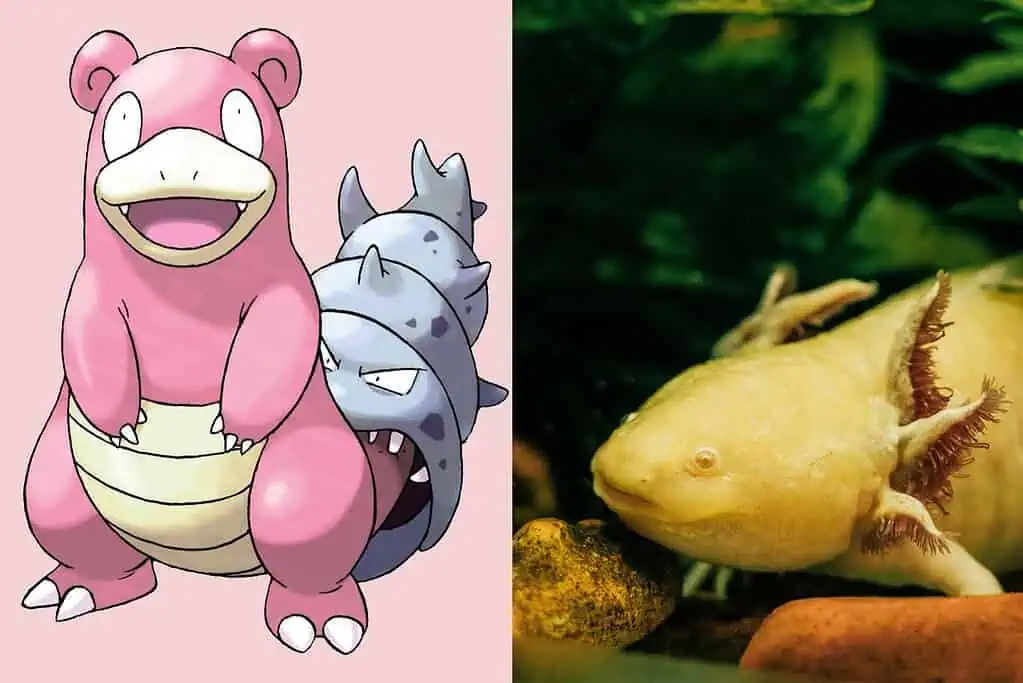
Regeneration, Like Slowbro
Slowbro’s healing power is essentially regeneration. In the real world, this ability belongs to one of the most charming creatures, the axolotl (Ambystoma mexicanum).
With a cartoon-like appearance and an endearing smile, the axolotl can regrow entire limbs, parts of its spinal cord, heart, and even brain tissue. It does this by reverting mature cells back to a flexible, stem cell-like state in a process called dedifferentiation.
“The axolotl is legendary for regenerating limbs and parts of the central nervous system,” says Maximina H. Yun, lead investigator on regeneration and aging at the Chinese Institutes for Medical Research in Beijing.
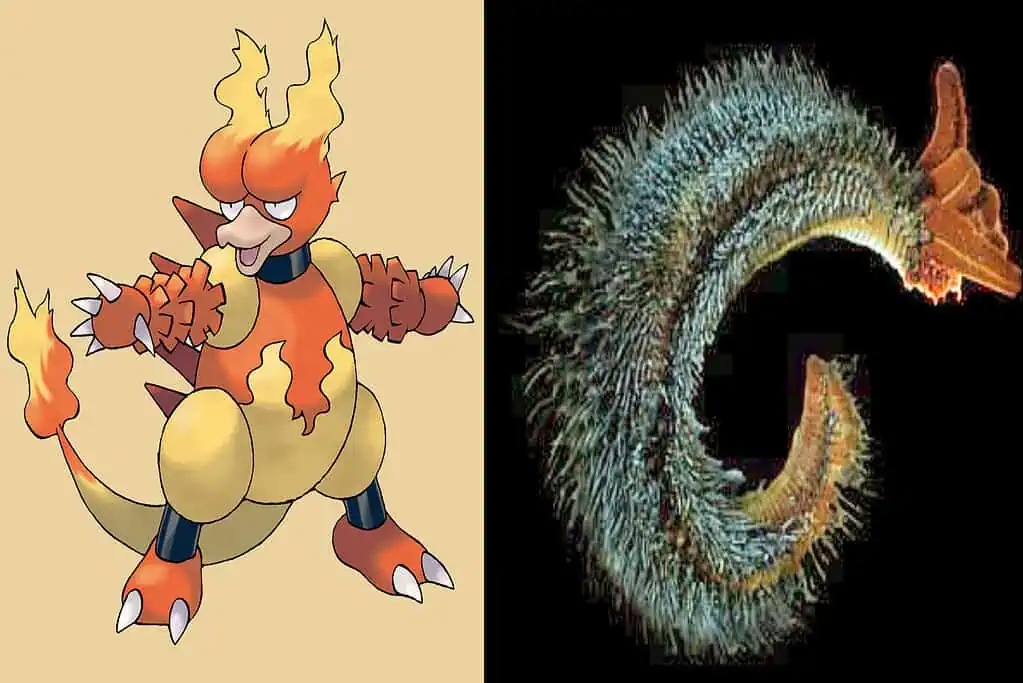
Extreme Heat Resistance, Like Magmar
Magmar is a fascinating Pokémon known for surviving lava-like environments. While no real animal can swim in lava, some come surprisingly close to enduring extreme heat.
For example, the Pompeii worm (Alvinella pompejana) lives near hydrothermal vents and withstands temperatures up to 80°C. It survives thanks to heat-resistant proteins and symbiotic bacteria that protect its body.
Studying such creatures helps scientists understand life in extreme environments, even on other planets.
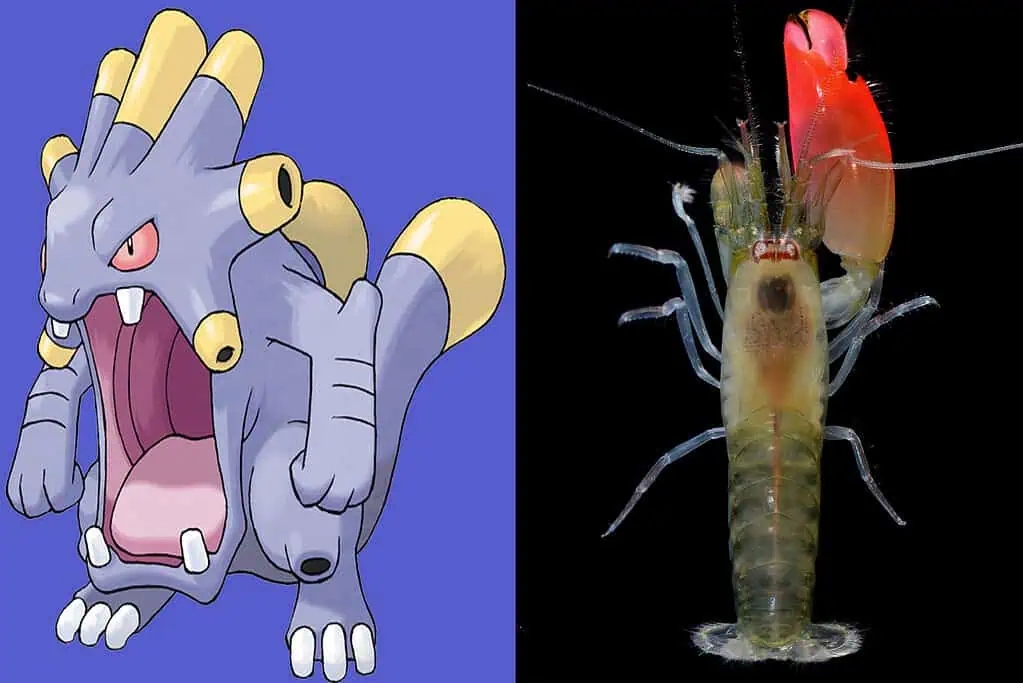
Sound Attacks, Like Exploud
Exploud uses powerful sound waves to attack, but some animals actually weaponize sound. The pistol shrimp (Alpheidae), for instance, snaps its claw so fast it creates a cavitation bubble, a pocket of air formed by a sudden drop in water pressure.
When this bubble collapses, it produces a shockwave, a brief flash of light, and intense heat. For a moment, the temperature inside the collapsing bubble can reach thousands of degrees Celsius, making it one of the most extreme biological mechanisms known.
Scientists study this process to better understand fluid dynamics, shockwaves, and energy concentration in liquids.
“It’s fascinating to consider whether we could harness the heat generated by cavitation as an energy source,” notes Ronjon Nag from Stanford University in his research on pistol shrimp.
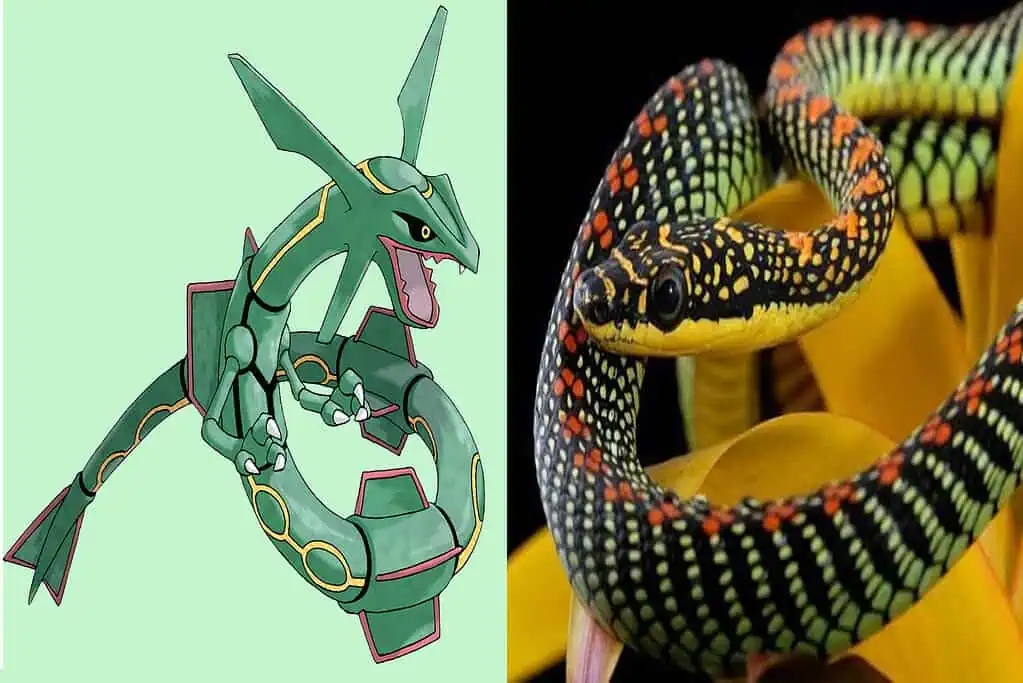
Wingless Flight, Like Rayquaza
Rayquaza is a large green serpent-like dragon that soars effortlessly without wings. It sounds unbelievable, but there is a real animal that comes close.
The flying snake (Chrysopelea) has uniquely evolved to move through the air. It launches itself from trees, flattens its body, and glides using a combination of body shape and motion.
Instead of wings, the snake spreads its ribs to flatten its body and moves in a wave-like pattern through the air. This undulating glide helps control direction and maintain lift, allowing it to cover distances of 20 to 25 meters.
Studies show this motion creates pressure differences in the surrounding air, similar to how wings work, enabling the snake to stay aloft.
“Flying snakes use their entire bodies as continuously morphing ‘wings’ to generate lift and flatten their glide trajectory,” a 2014 study noted.
This unusual movement could inspire the design of gliding robots and other wingless aerial systems.
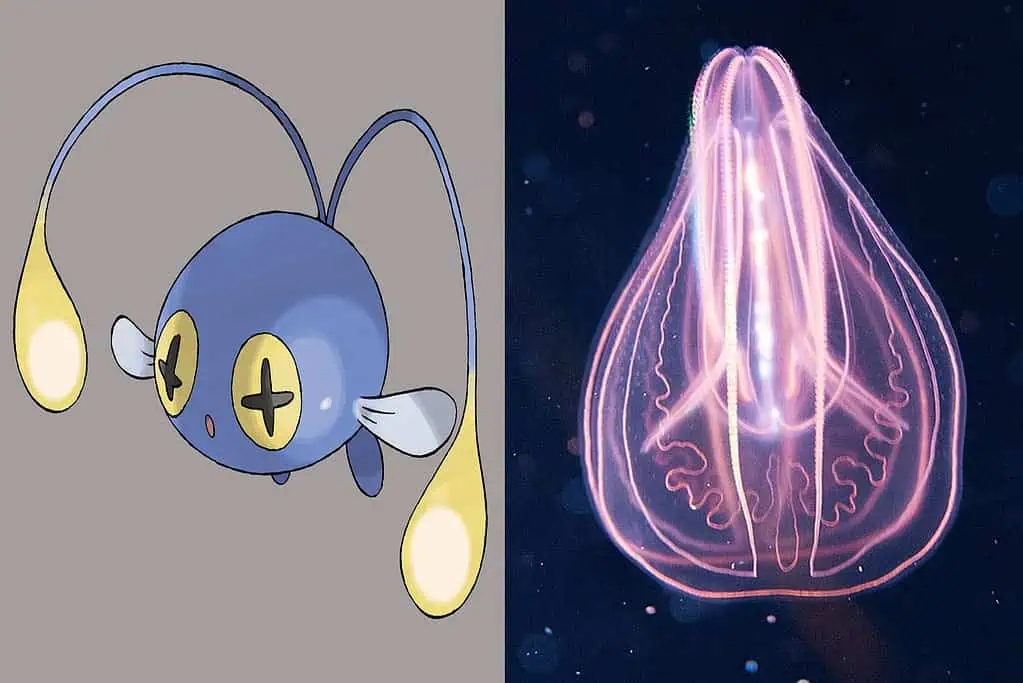
Bioluminescence, Like Chinchou
Chinchou glows in the dark ocean depths. Coincidentally, many deep-sea creatures do the same. For example, the anglerfish (Lophius piscatorius) uses bioluminescent bacteria on its lure to attract prey in pitch-black waters.
In the ocean, comb jellies (ctenophores) create shimmering waves of light across their bodies as they move.
Meanwhile, some deep-sea squids, like the firefly squid, use bioluminescence not only to illuminate but also to camouflage themselves by matching the faint light filtering down from above, a strategy called counter-illumination.