


Chapter 1179 of One Piece has sent the global fanbase into a frenzy as Oda delivers shocking twists right before the break. No longer hidden in the shadows of Mary Geoise, Imu has officially landed on Elbaph, bringing with him a dark power that could completely change the game.
Imu’s list of targets

Before leaving Mary Geoise, Imu recalled the figures who once sent chills down his spine. This list includes legendary names like Rocks D. Xebec and Gol D. Roger, as well as modern threats such as Luffy, Blackbeard, Shirahoshi, and notably Loki.
Interestingly, Imu states that his pursuit of Teach and Luffy is because they are heirs to Davy Jones and Joy Boy. His exclamation, “How long will you torment Me?” has sparked theories about a centuries-old grudge.
Controversial appearance and the cost of showing up

When Imu manifested at Aurust Castle through the Abyss Gate, the surrounding buildings and trees suddenly came to life as if affected by the power of the Soru Soru no Mi. However, this appearance was far from effortless: Imu coughed up blood and trembled all over.
This is a crucial detail Oda carefully inserted. Unlike previously using a subordinate’s body (like Saturn or Gunko), traveling directly in his own form seems to place an enormous strain on Imu. He is powerful, but not immortal or untouchable.
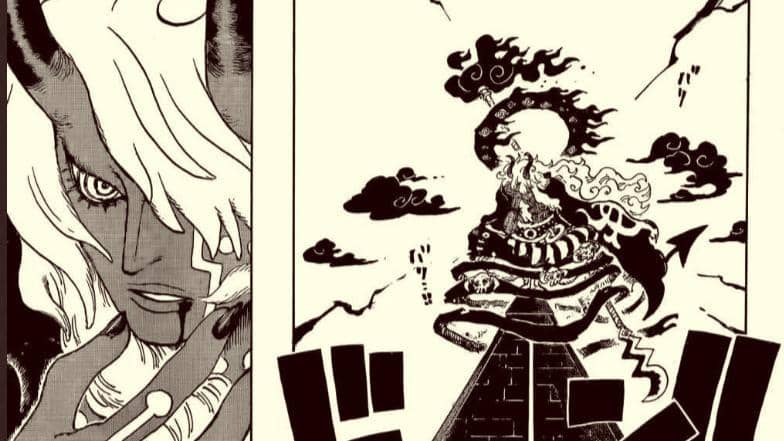
In terms of appearance, Imu has long white hair, dark skin, and unusual horns. Many speculated he might be Lunarian, but this design feels off, unlike any race previously seen in the One Piece world.
The mystery of the Akuma Fruit: A completely new concept?
The most puzzling aspect of this chapter lies in how Oda defines Imu’s power. In the original Japanese, instead of the usual kanji 悪魔の実 (Akuma no Mi) meaning “Devil Fruit,” the author deliberately uses katakana: “アクマの実” (Akuma no Mi).
This is definitely not a typo. Switching from kanji to katakana often implies a completely different concept or a primal “Akuma” entity unlike the Devil Fruit system we’ve known for 25 years. This makes Imu a wildcard outside the established Zoan, Paramecia, or Logia categories.