

Unbelievable Record-Breaking Success
In October 2020, Demon Slayer: Mugen Train premiered in Japan and instantly caused an unprecedented box office explosion.
During its theatrical run, Mugen Train set historic records in both the Japanese and global film industries, including: the highest opening weekend revenue in Japan’s history (4.6 billion yen in just three days), the fastest anime to reach 10 billion yen (only 10 days, far surpassing the previous record of 25 days held by Spirited Away), the highest domestic box office for any film ever in Japan (over 404 million USD, surpassing Titanic, Spirited Away, Your Name and others), the highest opening for a non-English foreign film in the U.S., the top-grossing film worldwide in 2020, and the highest-grossing anime of all time (507 million USD, dethroning Spirited Away after 19 years).

To date, Mugen Train remains the highest-grossing anime ever, far ahead of Spirited Away (395 million USD) and Your Name (382 million USD).
However, the incredible records set by Mugen Train are now threatened by the sequel, Demon Slayer: Infinity Castle – Part 1.
After its release in Japan on July 18, the first part of Infinity Castle achieved massive milestones such as the highest first-day revenue in Japan’s box office history (1.64 billion yen, about 11.1 million USD), a record single-day revenue in Japan (13.8 million USD on July 20), the highest opening weekend revenue (5.52 billion yen, about 36.8 million USD), and the fastest anime to reach 10 billion yen (only 8 days). After 13 days, this anime blockbuster continued to lead Japan’s box office, earning over 99 million USD.
Since Infinity Castle – Part 1 has only been in theaters for about two weeks and has yet to release internationally, its upcoming numbers could be even more staggering. Media outlets predict it could claim the title of highest-grossing anime ever, surpassing the 2020 film, as it depicts the final and most intense battle in Demon Slayer.
Despite these impressive figures, director Yuichi Terao stated that he and his team care more about positive fan and audience reactions than box office earnings.
“I don’t want to turn the film into a numbers game. I know people chase blockbuster hits, but we try to look beyond that to see happy faces among different viewers. We also hope to see them deeply engaged with the story. That combination is the motivation for us to keep creating anime. For us, nothing is more wonderful,” Terao told Crunchyroll News.
Engaging and Relatable Storyline
Since 2020, Japanese media has asked: “What lies behind the phenomenal success of the Demon Slayer anime at the Japanese box office?”
Before Demon Slayer, Spirited Away (2001) held an unchallenged position for nearly 20 years. It marked a historic victory, signaling a shift in Japanese anime from traditional to modern production styles.
Unlike Spirited Away, Demon Slayer is adapted from the manga Kimetsu no Yaiba by Koyoharu Gotouge, serialized from February 2016 to May 2020. This means the anime already had a loyal fanbase from the original manga.


However, this advantage is modest since, in terms of sheer readership, a relatively new series like Kimetsu no Yaiba struggles to compete with classic manga franchises like Naruto, One Piece, Attack on Titan, Detective Conan, or Doraemon.
The Demon Slayer anime even boosted manga readership. When the anime aired in 2019, manga sales jumped from 3.5 million to 12 million volumes within months. To date, the manga has sold over 150 million copies in Japan, becoming a cultural phenomenon.
One key strength of Kimetsu no Yaiba compared to its predecessors is its concise length of just 205 chapters. This manageable length offers a tight, well-paced story without the endless extension common in many shounen manga (which typically feature action, adventure, friendship, growth, and competition with male protagonists). This appeals to new readers who might be hesitant to start overly long series with uncertain endings.
To create a great film, the most important factor is a storyline that captivates the audience. Demon Slayer meets this requirement.
For those unfamiliar, Demon Slayer is set in Japan’s Taisho era (1912-1926). The main plot follows the Demon Slayer Corps, founded by the Ubuyashiki family to eradicate demons. The story begins with the massacre of the Kamado family, leaving only the protagonist Tanjiro Kamado and his sister Nezuko alive, though Nezuko is turned into a demon. To save his sister and fight demons, Tanjiro undergoes harsh training to join the Demon Slayer Corps.
Critics say the story isn’t groundbreaking but has lasting appeal suitable for all generations. It explores themes of family bonds, friendship, camaraderie, kindness, compassion, sacrifice, and personal growth. This resonates with both children and adults.

The story and film delve not only into the backgrounds of the main characters but also reveal the complexities of the demons’ side. This allows viewers to understand and empathize with each character. Many fans have shared being moved to tears by the characters’ final moments.
“Tanjiro carries a heavy burden but accepts it naturally without complaint. Watching someone face injustice head-on and overcome it through effort and strong will has become an inspiration for today’s audience. Additionally, the film features intense moments involving the demons. It’s not just an entertaining film but also deeply emotional,” anime critic Ryota Fujitsu told Mainichi.
Strategy Behind the Success
Another crucial factor contributing to the film’s success is changes in how the content is delivered.
While the manga was still being published, the anime adaptation aired starting April 2019 on Tokyo MX, a local Tokyo channel. Although it aired late on Saturday nights, the anime’s outstanding visual quality sparked excitement within the anime community, quickly making it a widespread phenomenon.
Fujitsu explained that airing on a local channel late at night helped deepen the story’s impact.
“Major networks have strict controls on what can be broadcast and their perspectives heavily influence content. In contrast, late-night slots on local channels allow the show to reflect the producers’ vision more accurately, making it easier to realize artistic ideas,” he said.
Later, the anime was also available on streaming platforms like Netflix, Funimation, and Crunchyroll, reaching a global audience more effectively.
According to 36Kr, the brand’s success also lies in its continuous content development model: TV anime, movie, TV anime, then a new movie. This creates ongoing anticipation among fans and generates strong media buzz.
The TV and movie versions connect story-wise, focusing on key manga chapters for the films. This builds viewing habits and curiosity, encouraging audiences to see the next part in theaters.
The production studio Ufotable also prioritizes image quality. They elevate 2D and 3D graphics integration to new heights. Special effects like water, fire, and lighting are so stunning that each frame could be a poster.
Compared to the original manga’s simpler art, the anime characters appear vivid, sharp, and nearly flawless. Expressions and movements are smooth. High-speed battle scenes remain clear and easy to follow.
Mugen Train was praised as having the most beautiful visuals in anime film history and even won the Japan Academy Prize. With Infinity Castle, technology and techniques have been further enhanced, delivering an unforgettable experience rivaling Hollywood action films, especially in IMAX theaters.
Sound and music also elevate the work. According to Simple About Things, composers Yuki Kajiura and Go Shiina blend traditional Japanese instruments (shamisen, shakuhachi) with modern orchestras, creating a soundtrack that feels grand and emotionally powerful in Infinity Castle. The sound design is sophisticated, from sword clashes to demon roars, adding depth to the viewing experience.
GamesRadar notes the music heightens the drama and tension in the latest Demon Slayer installment.
The two new theme songs, A World Where the Sun Never Rises by Aimer and Shine in the Cruel Night by LiSA, both voices closely linked to many classic Demon Slayer tracks, have received widespread praise from fans. They help elevate the emotional intensity and add weight to the story.
These visual and audio elements compensate for some story shortcomings. Voice acting also plays a key role in the anime’s success.
The film’s massive and creative promotional campaign cannot be overlooked. The team organized large-scale premieres, early screenings at IMAX theaters, released character posters, conducted director interviews, and held livestream press conferences.
They also partnered with companies like Lawson, GU, and Animate to boost merchandise production related to the film.
Fans were encouraged to share their experiences on social media, creating a viral effect.
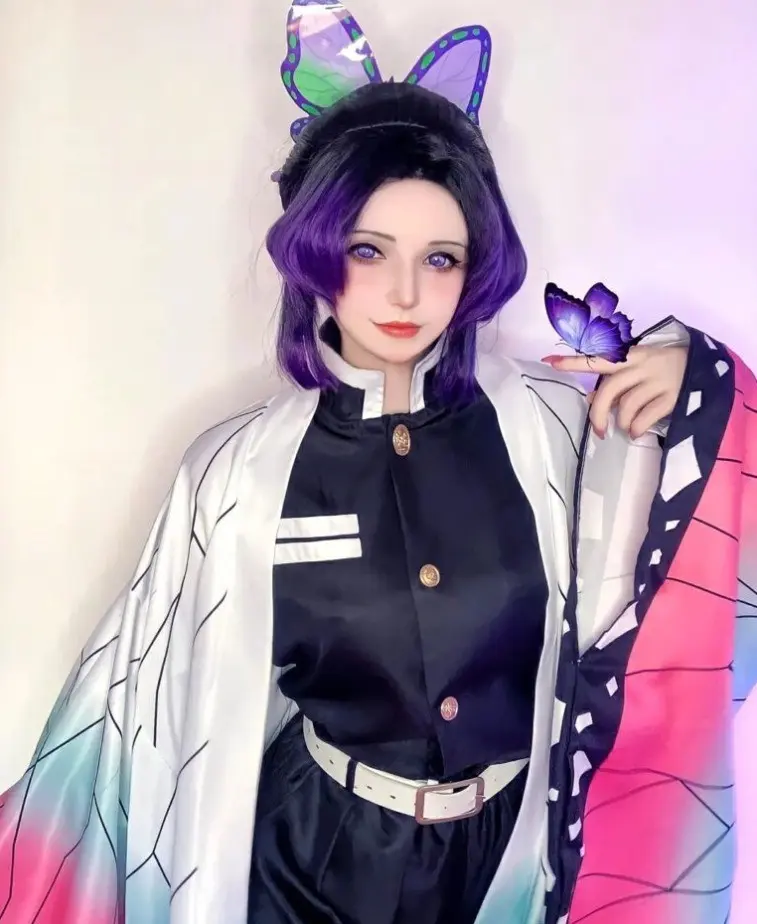
The Demon Slayer fan community in Japan is very active. According to Japanese media, fans organize group ticket bookings, line up at theaters on opening days, cosplay, buy merchandise, and create fan art. This dedicated fanbase is so large that each release feels like a pop culture festival.
Moreover, loyal fans often watch the films multiple times to support them.
Additionally, the Demon Slayer anime debuted right as the COVID-19 pandemic hit. Lockdowns forced many people to stay home, giving them time to discover new entertainment, especially on platforms like Netflix.
“When COVID-19 halted production and canceled many film releases, Demon Slayer became the first major release after a long drought of good films. Japanese audiences were eager to return to theaters. In that context, the film became a breakout hit,” cultural expert Matthew Alt explained.