

Throughout Dragon Ball, the Saiyan race has undergone countless spectacular power transformations. While some designs have faced criticism for being generic, each new form has become iconic the moment it was first revealed.
Vegeta, the Saiyan Prince, is no exception. Since Dragon Ball Z, he has unlocked many powerful transformations. Often, similar versions of his forms used by other Saiyans have gained more attention. However, among all of Vegeta’s transformations, one stands out for both its design and deep significance to the story and his character development.
Majin Vegeta: Vegeta’s Greatest Transformation
From the moment he appeared, Vegeta stood out among the villainous Saiyans for his pride and relentless ambition. He constantly sought to surpass Goku and collect the Dragon Balls to achieve immortality. This drive led to a direct confrontation with Goku, which is remembered as one of the most iconic battles in anime history.
After his defeat and reluctant alliance with the Z Fighters during the Namek Saga, Vegeta began to recognize his mistakes and chose to live on Earth, becoming one of its greatest protectors. However, the Buu Saga revealed that despite his heroic role, Vegeta still harbored darkness and inner conflict, something hinted at during his brutal moments in the Android and Perfect Cell arcs.
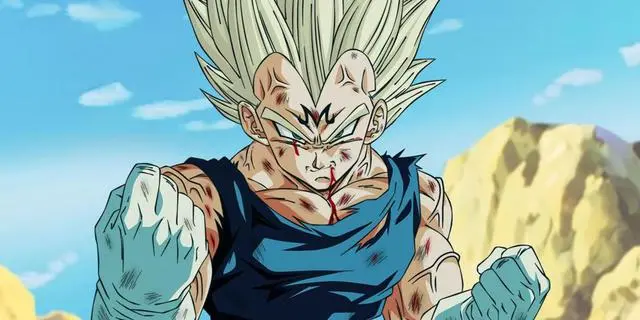
Exploiting this weakness, Babidi eventually took control of Vegeta’s mind, allowing his inherent evil instincts to take over. This transformation not only made him far stronger than before but also unlocked a higher level of power within his Super Saiyan 2 form.
When Majin Vegeta first appeared, fans were instantly captivated. This form is remembered as a major highlight of the entire Buu Saga. Although it made him a secondary villain in this arc, Vegeta’s journey into this dark role was compelling, as his acceptance of Babidi’s control perfectly matched his complex personality and inner turmoil.
In terms of design, Majin Vegeta did not disappoint. While mostly retaining his Super Saiyan look with golden hair and radiant aura, he showed notable differences: a significant increase in muscle mass and prominent veins gave him a wilder, more unstable appearance. This stark contrast to the heroic figure he aspired to be made the Majin form especially striking.
The real reason behind this transformation was Vegeta’s deep jealousy of Goku. He realized the only way to challenge the warrior he still saw as “inferior” was to embrace his ruthless, cold-hearted past, a man who wouldn’t hesitate to destroy an entire planet. When Babidi offered him that chance, Vegeta accepted the darkness within to gain ultimate power. What makes Majin Vegeta truly iconic is that this form never fully disappeared from his character later on.
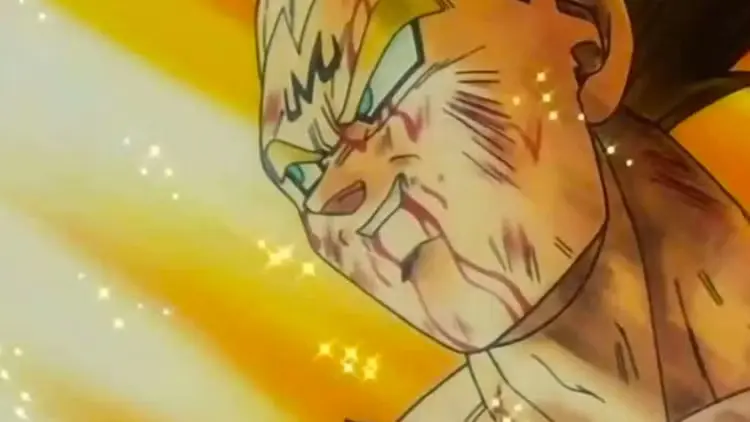
In reality, Vegeta changed for the better thanks to the influence of his family and Goku during his time on Earth. Ultimately, he chose to sacrifice his life to save the planet, creating one of the most powerful and emotional moments in anime history. This not only closed the chapter on Vegeta’s internal struggle but also cemented his status as one of Dragon Ball’s greatest characters, confirming Majin Vegeta as his most powerful and meaningful form.
Only One Other Form Comes Close to Majin Vegeta
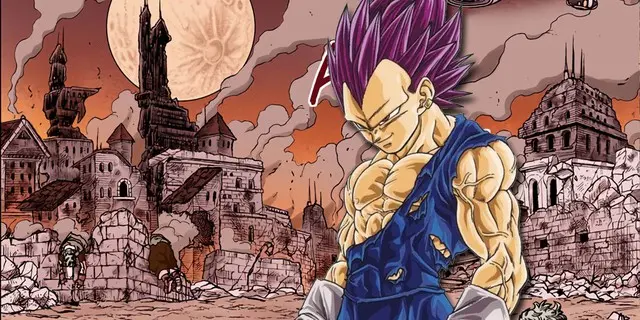
Among the many forms Vegeta has taken, only Ultra Ego, introduced recently, rivals Majin Vegeta in power and significance. Since Goku unlocked Ultra Instinct, Vegeta has tried to follow but struggled because that form’s fighting style differs greatly from his own. To match Goku’s level, Beerus introduced him to Ultra Ego.
Ultra Ego is the Gods of Destruction’s answer to the Angels’ Ultra Instinct, characterized by growing stronger the more damage Vegeta takes instead of dodging attacks. This form perfectly suits Vegeta’s fighting style, which relies on brute strength and endurance rather than evasive techniques. Though it’s his newest transformation, Ultra Ego is the only one unique and impressive enough to compete with Majin Vegeta in terms of meaning and coolness in Vegeta’s development.
According to Gamerant