


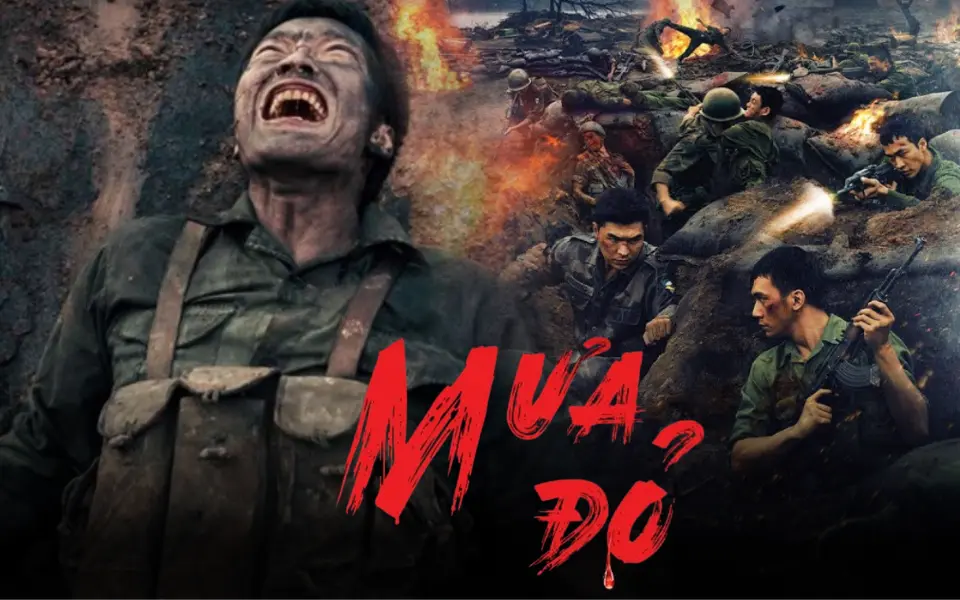
Red Rain is a film that vividly recreates the brutal 81-day battle at Quang Tri Citadel in 1972, where thousands of young men put aside their studies, loves, and youth to take up arms and defend every inch of their homeland. This is not just a war movie filled with explosions and gunfire, it is an epic tribute to the human stories within the conflict: soldiers who fell with dreams unfulfilled, mothers who silently mourned their sons, and real wounded veterans who appear in the film, bringing to life a fiery memory that has never faded. Watching Red Rain is stepping into a fierce memory where audiences not only witness the harshness of war but also deeply appreciate the value of today’s peace.
A Shocking Question Reveals War’s Truth
“Do you want to lose an arm, a leg, or go blind? One-quarter disability or three-quarters?” This half-joking, half-serious question from wounded veterans on the Red Rain set stunned both actors and viewers. It was not scripted, nor a director’s makeup trick. It came naturally from soldiers who had truly lived through the fiery summer of Quang Tri in 1972 and carried wounds that would never fully heal.
Beneath the seemingly lighthearted tone lies a raw truth: war means loss, injury, and paying with blood and youth. The veterans’ dark humor only sharpens the pain, as behind their smiles lie years of brutal memories etched deeply in their minds.
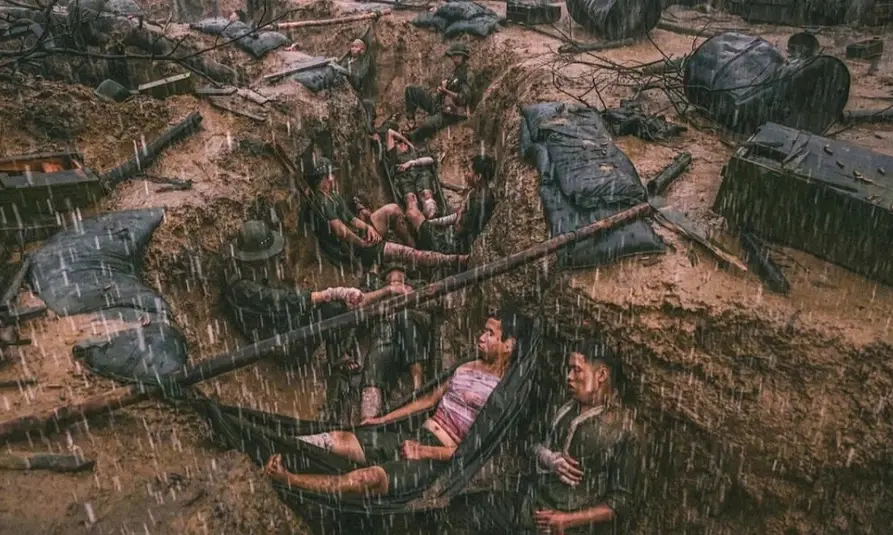
This spirit is exactly what Red Rain conveys. It avoids glorifying war or painting a one-sided heroic picture. Instead, it presents a blood-stained, tear-filled canvas illuminated by comradeship and the will to survive and protect every inch of land. Adapted from Chu Lai’s novel, the film rekindles memories of the 81-day battle for Quang Tri Citadel, a fight that was not only strategically crucial but also historically significant in the Paris peace talks.
Among many poignant details director Dang Thai Huyen brings to the screen, inviting real wounded veterans to participate was the boldest choice. They don’t just reenact war, their very bodies turn Red Rain into a living testament. The question “Do you want to lose an arm, a leg, or go blind? One-quarter disability or three-quarters?” cuts deep into the audience’s heart, engraving the harsh reality of war.
War Memories Brought to Life
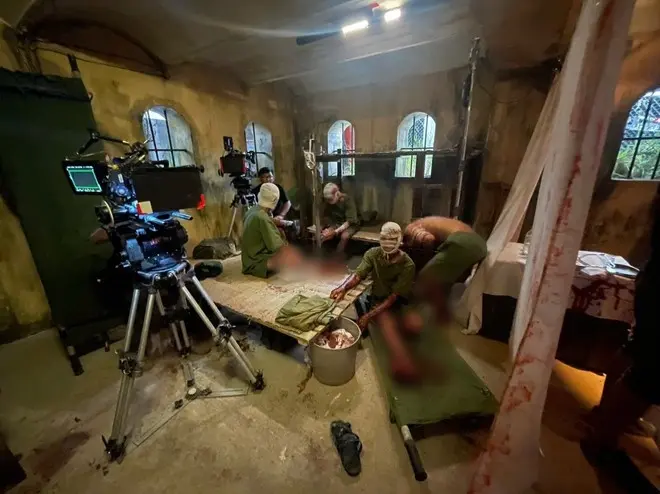
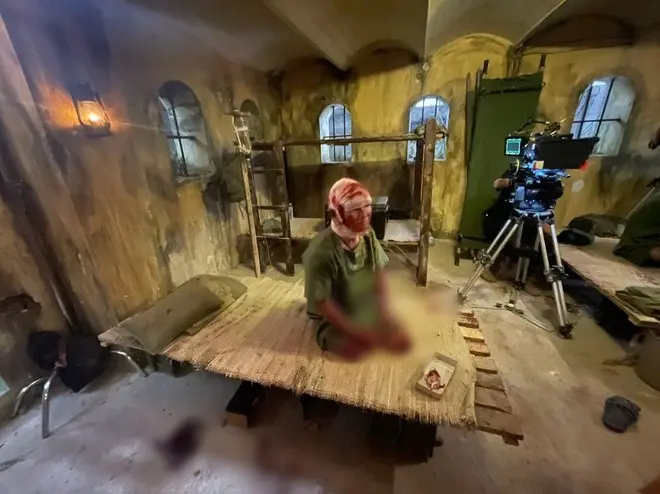
Unlike previous war films where audiences mostly saw staged explosions, smoke, and combat scenes, Red Rain takes it further by casting real wounded veterans who survived the Quang Tri Citadel battle. This blurs the line between cinema and reality.
In one scene set in a surgical bunker, wounded soldiers lie stacked like fish. Moans echo through the cramped space. The camera pans over a freshly amputated leg, a bloodied body, and a pale, bruised face. Viewers might think it’s makeup or special effects, but these are real veterans carrying injuries from 1972. Following this is a scene where Doctor Le (played by Hua Vi Van) must amputate a comrade’s leg without anesthesia. Hua Vi Van recalled that after filming, he and co-star Hieu Nguyen couldn’t hold back tears. Standing among real wounded soldiers, the pain they endured was no longer acting but raw reality.
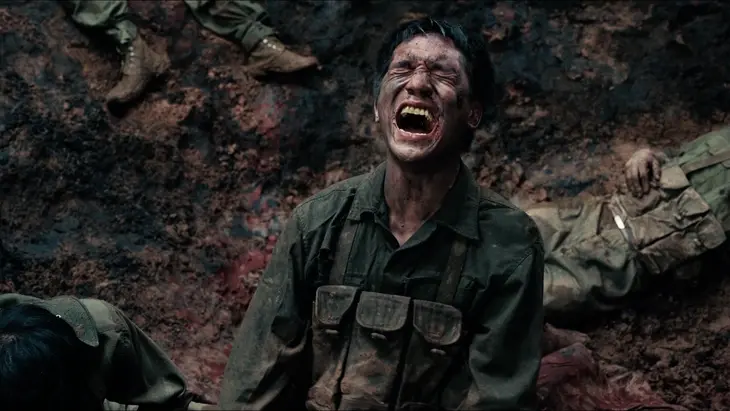
The phrase “Do you want to lose an arm, a leg, or go blind? One-quarter disability or three-quarters?” may sound like a casual joke, but it reveals more than any brutal battle scene. It reflects the soldier’s mindset: accepting injury as inevitable, even joking about “choosing” their wounds. Behind this calmness lies resilience, because for them, returning home was a blessing, thousands of comrades remained in the Thach Han River. As one veteran said at the film’s press conference, “The citadel is wide, but my comrades lie crowded.”
The presence of real veterans adds a unique emotional layer. Audiences don’t just see the fictional tragedies of characters like Cuong, Ta, Binh, Hai, Tu, or Tan, but also real lives. Cinema here becomes a “living memory,” where past and present meet. After the bombs come bodies, after the battle come wounded soldiers drifting in the Thach Han River. In this harsh truth, the veterans are not just extras but mirrors reflecting that war is not distant history, it lives on their bodies today.
When Red Rain Becomes More Than a Film
Director Dang Thai Huyen shared, “The veterans always arrived on set early, some riding homemade three-wheeled bikes. Filming took place during Quang Tri’s cold season, yet they endured the chill lying still while we applied makeup in thin summer uniforms, then filmed for hours. The cold must have made their old wounds ache. We deeply admire their spirit as soldiers of Uncle Ho’s Army and are forever grateful they helped us bring this chapter of our nation’s history back to life.”
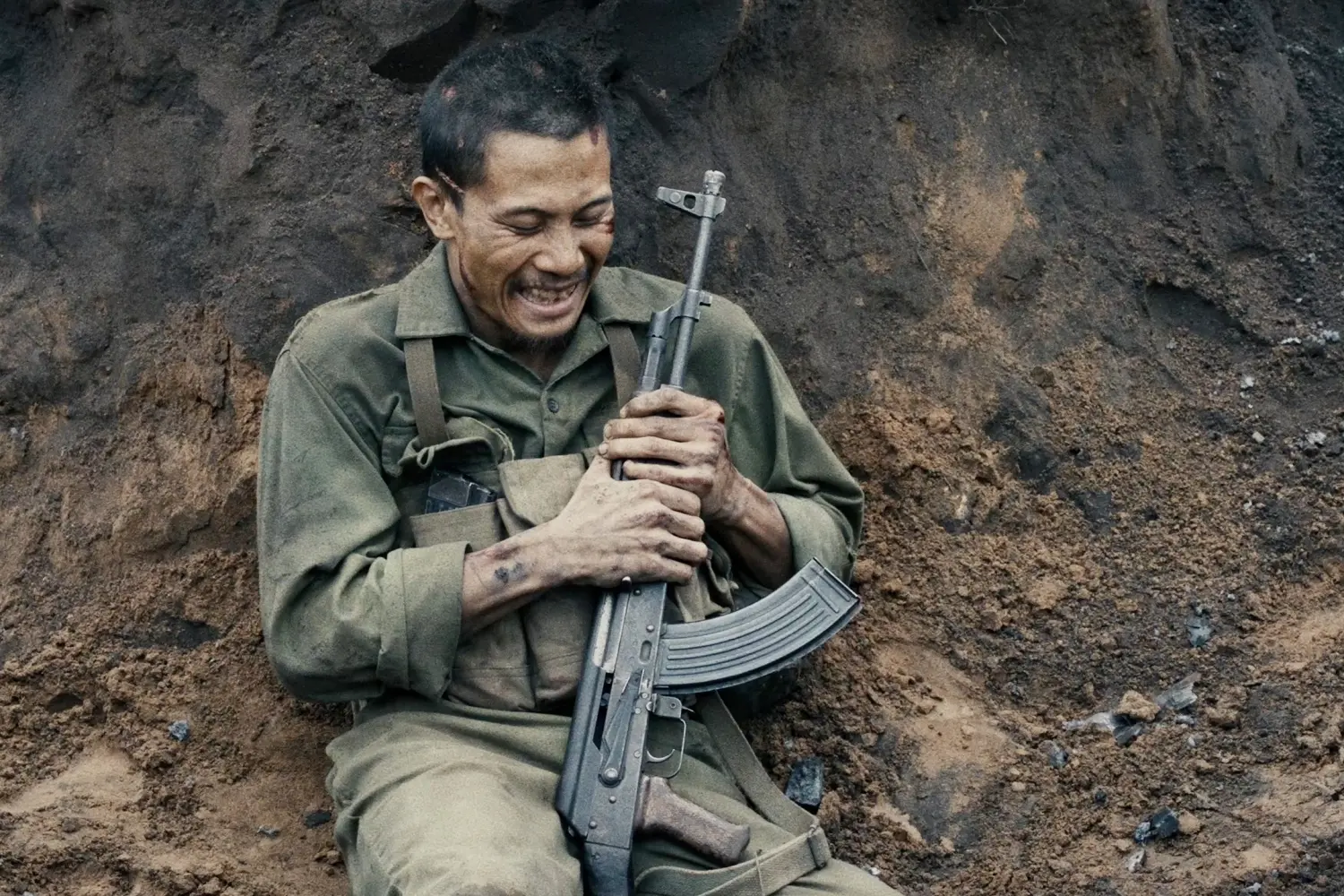
This decision to involve veterans makes Red Rain unlike any other war film before it. Its value lies not only in grand scale and authentic battle scenes with real planes and tanks but also in its humanity, recreating memories through the presence of those who lived them. For younger viewers, it is more than a movie, it is a vivid history lesson.
The film’s closing scene features a memorable detail: an S-shaped scarf cut in half, each piece held by soldiers on opposing sides. This sparked debate, some saw it as a symbol of a divided country, others dismissed it as coincidence. Yet, perhaps even more haunting is the veteran’s question: “Do you want to lose an arm, a leg, or go blind? One-quarter disability or three-quarters?” It not only captures war’s cruelty but also delivers a message to future generations: war leaves losses that can never be repaired.
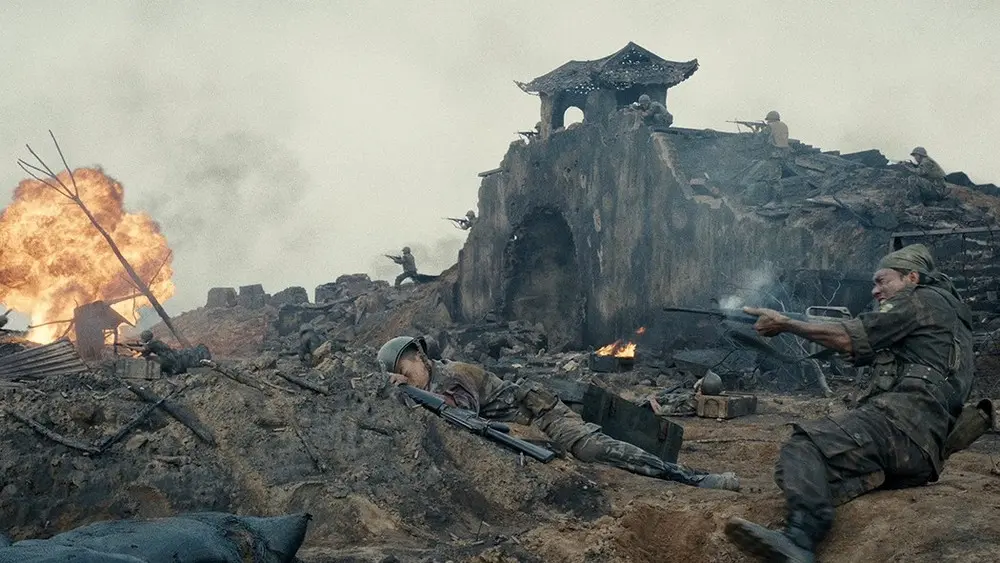
Artistically, this bold choice is justified. Realism is not meant to shock but to awaken empathy. Historically, it honors veterans who lent their bodies to the film, allowing them to reunite with comrades and relive their youth. Red Rain is a tribute to the souls resting beneath the citadel’s grass and the Thach Han’s waves. War leaves more than casualty numbers, it imprints itself on the flesh and memories of real people. Red Rain achieves what few Vietnamese war films have: turning history into a living experience, transforming tragedy into an unforgettable truth. It is not just a film. It is memory, a reminder, a long tolling bell for today’s generation that peace was bought with blood, youth, and broken bodies.
Sometimes, just one short question, “Do you want to lose an arm, a leg, or go blind? One-quarter disability or three-quarters?”, can etch this truth deeper than any history book.