


In the mass production lines of the 22nd century, Doraemon was originally labeled a “defective product” after a rare electrical accident caused him to lose some key components and his flawless functionality. Compared to other Matsushiba robots with superior intelligence, sleek appearances, and perfect precision, Doraemon seemed like a clumsy failure. He was afraid of mice to the point of losing control and often grabbed the wrong gadget in moments of panic.
However, viewed through the lens of humanistic economics and modern psychology, these “system errors” actually make Doraemon a unique entity with value far beyond any perfectly programmed version.
In an era where artificial intelligence has advanced tremendously, perfection often comes with soullessness. Future “perfect” robots operate strictly on optimized algorithms, performing tasks mechanically and lacking empathy. In contrast, as a flawed product, Doraemon possesses an unstable but deeply human emotional system.

The “chubby cat” feels insecure about his missing ears, experiences love’s stirrings, and feels heartbroken when Nobita fails. In Doraemon, the value of this robot cat lies not in the power of his gadgets but in his emotional intelligence (EQ), something that only emerges when a being confronts its own wounds and imperfections. Doraemon’s empathy for Nobita is the empathy of someone who shares the same struggles, creating a strong emotional bond no perfect robot can replicate.
From an economic perspective, mass-produced items with uniform quality tend to lose value over time. Conversely, unique products with “flaws” often become priceless collectibles. Doraemon is a positive “mutation” in technology.
As a flawed version, Doraemon thinks outside logic and solves problems creatively, beyond any manual. When Sewashi sent Doraemon back to help Nobita, the robot brought not only technology but an independent personality. In a society where everything is replaceable, a robot capable of critical thinking, with a distinct character and willingness to sacrifice for others like Doraemon becomes a one-of-a-kind treasure. A perfect robot might teach you to excel academically, but only a “defective” robot like Doraemon can teach you how to be a kind human.
If Sewashi had chosen the most advanced robot version to assist Nobita’s ancestor, the Nobi family might have become emotionless billionaires or people entirely dependent on machines. The arrival of a flawed robot like Doraemon was actually a deliberate humanistic test.
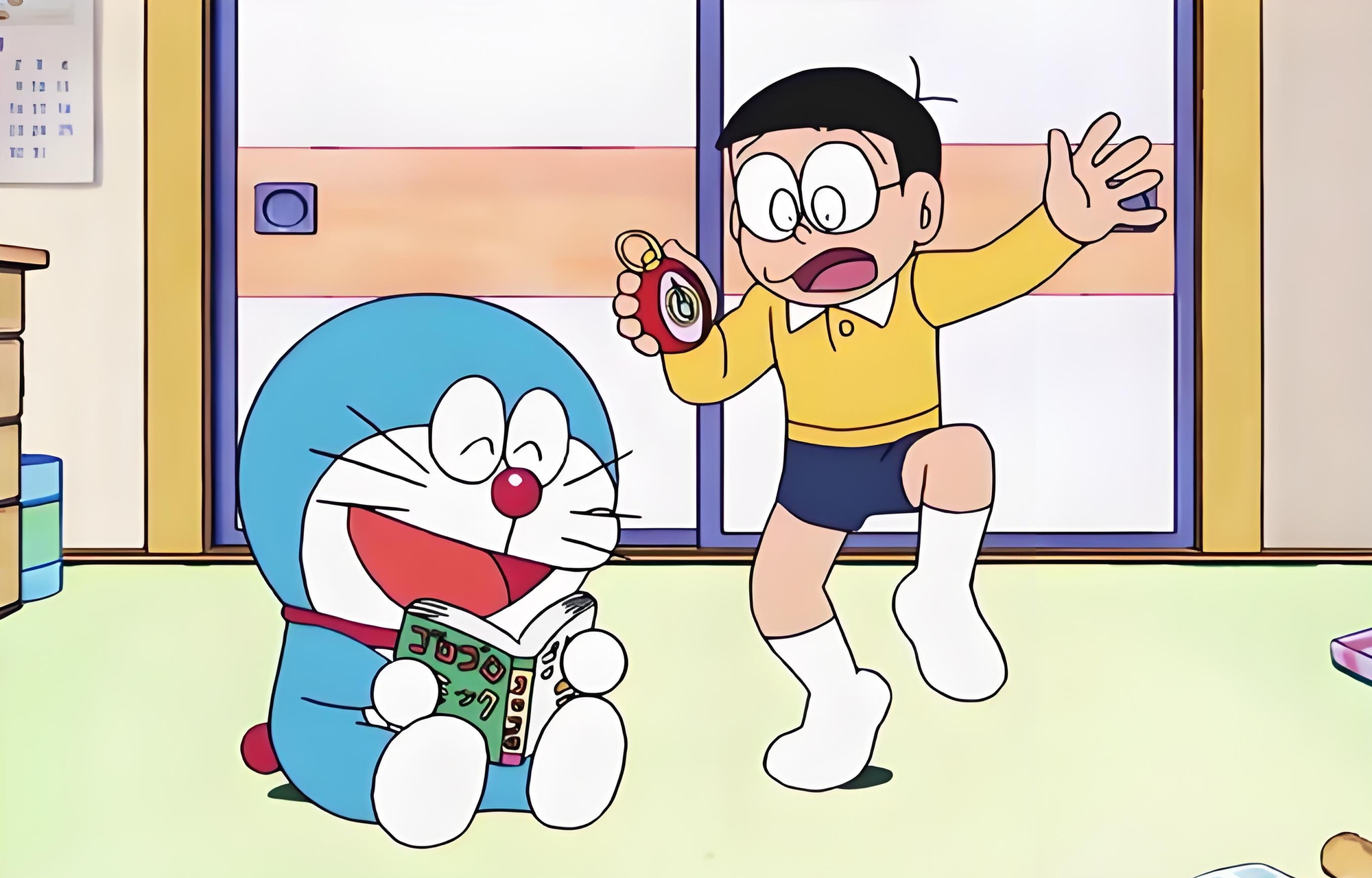
Because Doraemon sometimes makes mistakes, Nobita has to correct them alongside the “chubby cat” and grow together. Their relationship is mutual support between two imperfect beings, rather than one-sided service from machine to human.
Doraemon’s value lies in inspiring Nobita’s inner effort, transforming a lazy boy into a responsible man. This is an educational achievement that flawless, rule-following robots would surely fail to accomplish.
The story of Doraemon offers a profound lesson for our digital age: do not fear imperfections. Scars, mistakes, and “flaws” during growth are what define each individual’s uniqueness.
Doraemon is happy not because he fixed his flaws to become perfect, but because he found a family that accepts and loves him for those very imperfections. In today’s world, where the pressure to be perfect weighs heavily on young people, the image of the blue robot cat remains a comforting symbol, reminding us that sometimes, imperfection is what makes a person truly valuable.